
Tag Archives: radiology informatics

AI Reimbursement Is Becoming a Workflow Problem

CMS has proposed a new way to recognize and potentially pay for certain software-based clinical services (always start with the fact sheet – far more readable than the full text). This may matter in radiology, but it does not mean every AI tool will suddenly be reimbursed by Medicare.

The proposal calls these tools Software as a Medical Service. Examples include software that extracts useful information from medical images, such as heart blood-flow analysis, fracture-risk scores, or brain MRI comparisons. CMS would give some of these services their own payment category while it learns more about how they are used.

Medicare is beginning to acknowledge that some software can provide clinical information beyond a simple workflow aid, and it augments rather than replace physician work (Radiologists have been saying this for a while, and other -ologies expected to follow as product lines expand). Still, the proposal is temporary and limited. Many AI tools would not qualify for separate payment, and payment will depend on appropriate ordering, documentation, billing, and medical necessity.

Clear language matters – CMS differentiates between assistive, augmentative, and autonomous. Software that helps a radiologist work faster (assistive) is different from software that provides new, clinically useful measurements (augmentative). Both differ from a system that makes a diagnosis without a clinician (autonomous). Administrative tools such as scheduling or drafting messages can be useful, but they are not diagnostic services.

The bigger challenge is workflow. Buying or building a tool is only the beginning. All of it involve some form of cost. Hospitals must integrate it into their systems, review privacy and security, train staff, check its performance, document its use, bill correctly, manage denials, and show that it improves care. On the flip side, a billing code alone does not guarantee revenue.

For radiology leaders, the practical next step is to take inventory: Which software tools are already in use? What do they add to patient care? Are eligible services being documented and billed correctly? What do they cost, and what clinical decisions do they improve?

CMS’s proposal is a meaningful step, but not a windfall. The opportunity is to identify the software services that provide distinct value, and build reliable workflows around them.
FDA AI Guidance and the Hard Part of Transparency

The least glamorous part of AI in radiology may turn out to be the most important: telling people what changed.

That sounds simple. It is not. A diagnostic AI tool may be trained on one dataset, validated on another, deployed inside a PACS or reporting workflow, monitored after release, and then updated when the model, threshold, input, interface, or intended environment changes. Somewhere in that chain, a radiologist is expected to decide whether to trust a box, a score, a contour, a triage flag, or a sentence.

Continue reading

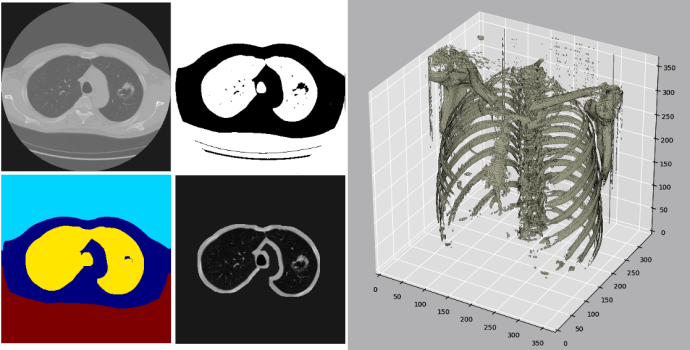
DICOM Processing and Segmentation in Python – Radiology Data Quest

There is something strangely satisfying about being able to take things apart and putting it back together.  Inspired by the popularity of Lego sets in our childhoods, Minecraft brought this sense of wonder to video games.

For those of us who are life-long tinkerers who happen to be radiologists, I published in Radiology Data Quest a DIY on how one take DICOM apart and manipulate it.  All in Python, no less.


DICOM is a pain in the neck.  It also happens to be very helpful.  As clinical radiologists, we expect post-processing, even taking them for granted. However, the magic that occurs behind the scene…

Source: DICOM Processing and Segmentation in Python – Radiology Data Quest

Is your niche too narrow? Too wide? It doesn’t matter.

Academics care about being in a niche.  A person only has 24 hours a day and 7 days a week.  It’s practically impossible to be the world expert in everything.

Some days I worry that my interest in informatics is too narrow.  So tell me again, why wouldn’t anyone just hire either a dedicated radiologist or a dedicated informaticist?  What’s the point of you?

Some days I worry my niche is too broad. Because that’s basically all of radiology, you dimwit!  That inner voice in my head would scream.   How can you expect to understand all of what makes my profession tick, all the intricacies behind every segmentation algorithm, every big-data challenge, every line of code?  Give it up.

And then there are days when I spend 8 hours doing something I want to do, and the day feels 20 minutes long.  Days when I feel tired but satisfied, proud to have made those career choices.

These are the days when that voice doesn’t speak.