Category Archives: Figure Stuff Out

Thoughts and observations about everything in the kitchen sink from the meaning of life to deep-fried sushi.

AI Can Raise the floor, But People Determine The Ceiling.

AI readiness is often treated as a technical skill, as though one could study for it, take a test, and be done. It is a pitfall particularly in education – what does it even mean to teach residents to be ready for the AI age?

Researchers at UT Austin asked 523 early-career professionals to do client-like work with an AI agent, then compared their results with an AI-only baseline. About half were “AI Amplifiers”: they did better than AI alone. A quarter were “Delegators”: their work was about as good as the AI’s. The rest, “Apprentices,” did worse, even though they were not necessarily less capable.

Yes – about a quarter of the early-career professional appeared to produce worse outputs when using AI compared to than just having it done by AI alone. (The reality is probably that the researchers were better prompt engineers than the apprentices).

Strong users framed the problem, used real domain knowledge, checked the output, and refined it over several rounds. AI was used as a collaborator that needed direction and oversight.

This feels familiar in resident education. An algorithm can produce a useful first pass. Safe clinical value still depends on whether the clinician asks the right question, spots what does not fit, and knows what to do next.

The lesson is not to teach longer prompts. It is to teach judgment in the workflow: frame, check, refine, decide.

AI can raise the floor. People still determine the ceiling.

Source: McCombs School of Business, University of Texas at Austin.
A Tiny Rocket Altimeter, Or How To Make Model Rocketry Slightly More Complicated

My 8-year-old has been into model rocketry for the past few years. Like a lot of good hobbies at that age, it has the right mix of building, anticipation, mild danger, and a satisfying countdown.

The only problem is that we live in Cleveland, and Cleveland winter is not exactly the most launch-friendly operating environment. Model rockets and lake-effect snow do not have a natural partnership. So for a good part of the winter, we talk about launches, plan launches, look at parts, imagine future launches, and wait.

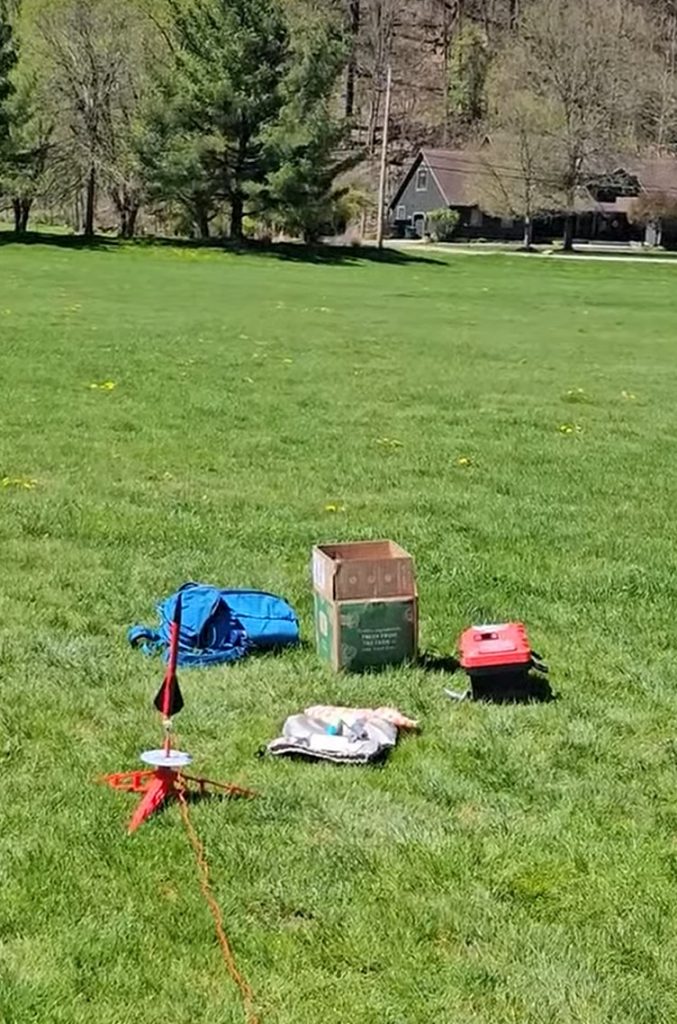
A model rocket launch setup on a grassy field with launch gear nearby.
The launch-day setup, finally outside after a winter of planning. That on the mount is an Estes minimum diameter rocket called Hi-Flier

Somewhere in that waiting period, the project shifted from “let’s launch rockets” to “what if we could measure what the rocket is actually doing?”

Continue reading

The Medical Profession is Telling on Itself

Most conversations about physician burnout focus on workload. This study points somewhere more fundamental. And in it, I learned a new phrase.

According to a new JAMA paper, nearly 40% of physicians report “moral distress,” which is the experience of knowing what the right thing is for a patient, but being unable to act on it because of constraints in the system. 

Burnout is depletion. On the other hand, moral distress is about misalignment.


The consequences are predictable. As moral distress rises, so do burnout, intent to reduce clinical hours, and intent to leave practice.

Radiology is not exempt, although it is also not an outlier. In this dataset, radiologists had similar odds of moral distress compared to other physician groups.  Diagnostic radiology is often viewed as buffered, since we do less bedside care and more asynchronous work.

Yet the same structural forces apply: throughput pressure, fragmented workflows, and responsibility without full control over downstream decisions.  It was to fight these problems that I first began dedicating a career in informatics.  Classic informatics is about using information and data to address all of these.

Moral distress is more of a meta-problem. It is a systems design problem (and ironically, at times, technology has become a contributor).

When the best way to deliver work conflicts with operational reality, the system absorbs that gap through clinician distress. Over time, that becomes burnout. Then attrition.

Does AI Workflow Decide Who’s to Blame?

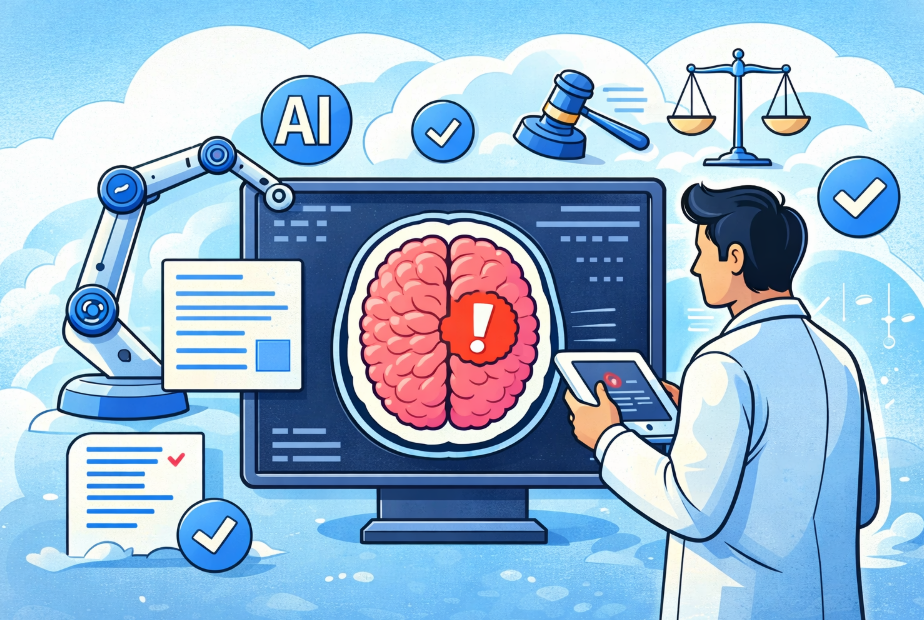
Many of us have wondered this question, but few have data to support an actual argument: what happens legally when AI catches a finding and the radiologist misses it? Apparently, jurors have an opinion on this matter.

This Nature Health brief communication was recently published. If you don’t have access to Nature Communications, the authors have shared a preprint as well.

Participants acting as mock jurors passed judgment on a malpractice scenario involving a missed brain hemorrhage on CT on a stroke case.

The TL;DR on the case: AI flagged the bleed correctly. The radiologist and the final report did not. The patient was catastrophically harmed.

Two variants of the malpractice scenario were compared.

  • AI-Human, in which the human reviews an AI output and renders a final report
  • Human-AI-Human, in which the expert first reviews the case alone, then reviews AI, and then creates the final output

In both cases, the final diagnosis was incorrect; in both cases, the patient was harmed.

Both scenarios had human in the loop.

The only difference is that the second was set up as an “AI sandwich”: The human expert both began the evaluation without AI, and then had an opportunity to revise the evaluation after AI.

Does it make a difference? What do you think?

Continue reading

A Focal Point on Radiology AI?

The FDA has selected Rick Abramson to lead the agency’s Digital Health Center of Excellence (DHCoE).

On paper, it’s a straightforward personnel move: a physician-executive with digital health experience steps into a role created to help the agency keep pace with software-driven medicine. In practice, this looks like a flare signal, because it lands right as FDA is reworking how it regulates AI and other digital health products, and just weeks after the agency publicly described a lighter-touch posture for parts of the market.

What’s (perhaps more) interesting is that Rick is a diagnostic radiologist. One with a heavy radiology AI résumé in the commercial space.

I have had the fortune of several conversations with Rick as I chaired the ACR Data Science Summit over the past few years, and then in a few personal conversations. Along with the combination of imaging AI, commissioner’s office policy exposure, DHCoE leadership, I’m interested in seeing what comes out of this CoE and will be following closely.

When AI Saves Time but Steals Your Evening

There is a lot of AI-generated, AI-related content out there lately. This HBR article seems to stand out with interesting findings. It’s behind a paywall, but here are the takeaways.

Generative AI was supposed to buy us time. An eight-month field study inside a ~200-person U.S. tech company suggests it can do the opposite: it intensifies work.

  • First, AI lowers skill barriers, so people take on tasks they previously wouldn’t. This means designers writing code, analysts drafting research, clinicians spinning up analyses. That feels empowering, but it also creates downstream “cleanup” work for others who must review, correct, and integrate AI-assisted output.
  • Second, AI makes work frictionless enough that it seeps into the in-between moments. Lunch breaks, late evenings, the quick “one more prompt.” The result is blurrier boundaries and less real recovery.
  • Third, AI encourages parallelism: multiple drafts, multiple threads, constant checking. That boosts throughput, but it also fragments attention.

The article goes on to describe a vicious cycle in which the more your colleagues do it, the more it becomes a culture, one in which you feel compelled to keep up. Using more AI.

I’ve felt a version of this personally. A few years ago, I stopped blogging regularly to make more time for kids and life outside work. With generative AI, getting a post out is genuinely easier. It’s a idea and some prompts, edits, and reviews away. But it still has to happen sometime… which, for me, often means well into the evening, in the dark, with the quiet (adorable) snoring noises of kids nearby.

Continue reading

Artificial Intelligence: Are you a Centaur or a Cyborg?

In the rapidly evolving field of radiology, artificial intelligence (AI) is not just a tool but a collaborator, reshaping the dynamics of diagnosis and patient care. On the first order, the answer seemed clear: knowledge workers using AI outperforms those that don’t.

But the literature offers little detail on what happens after you embrace AI. Just with every tool ever existed, it really matters how you use it. As it turns out, it also matters how AI becomes part of your work.

To better understand this partnership, a group of Harvard Business School scholars published a study on business consultants who have, and who have not, opted to adopt GPT-4 in their daily work in spring 2023. There are several interesting conclusions – one of them delve into the analogy of centaurs versus cyborgs, concepts borrowed from mythology and science fiction that provide a vivid framework for the interaction between human intelligence and AI in radiology.

Continue reading

Getting Started with NVidia Jetson Nano via JetBot

As part of the effort to explore NVidia Jetson Nano, and part of its AI Specialist course (after finishing Fundamentals of AI in Nvidia Deep Learning Institute), I started buliding a JetBot.

JetBots are well documented and relatively easy to build provdied you have the right parts. There is also a bill of materials to make purchasing simpler.

The chassis was 3D printed according to the full DIY instructions (did not use a kit).

The camera used in this picture is actually from a Rasp Pi infrared camera I bought years ago. Turns out I could remove the lens and apply to another camera I bought for this project (IMX290-160FOV). It turns out that the 70 degree FOV on the lens was really just not wide enough to see what is going on. The 160-degree FOV was perfect and seems to help the bot see around itself.

This post is part of a series on learning about Internet of Things. These posts are mainly a learning tool for me – taking notes, jotting down ideas, and tracking progress. This means they might be unrelated to radiology or healthcare. They also might contain works-in-progress or inaccuracies.

Different flavors of ESP8266

ESP8266 is a wifi enabled microcontroller. One of the most helpful ones because of it’s wifi ability and very low cost. This makes the ESP8266 popular in even commercial products that need wifi connectivity.

For development purposes, there are also a lot of variants for this chip. After some preliminary research, there appears to be two most helpful breakout boards for it.

NodeMCU

NodeMCU / ESP8266

NodeMCU is technically the name of the Lua-compatible firmware for ESP8266, which later added support for ESP32 (the more powerful, dual-core sibling of ESP8266). NodeMCU was created in 2014 when user Hong committed the first file of nodemcu-firmware to GitHub. but people sometimes use this term to refer to breakout boards using ESP8266 following this particular schema. It comes with additional chips that enable USB-to-serial and other “quality of life” enhancements that make development easier. The breakout board is also compatible with solderless breadboards, making prototyping much easier.

Continue reading

UT Audit of MD Anderson / IBM Collaboration

The details can be downloaded here.

A few snippets…

“Gift funds used in support of the OEA project have a deficit balance of $11.59 million as of August 31, 2016, meaning that MD Anderson spent gift monies it has not yet received from donors.”

“Agreement with PricewaterhouseCoopers (PwC) for “Business Plan for a Flagship Informatics Tool” to lead an assessment of the “capabilities necessary to build the tool” and “incorporate the outcome of the assessment into a business plan that will guide the development” of the tool.”

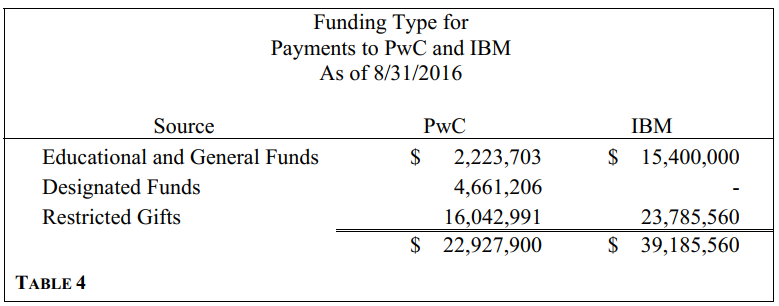
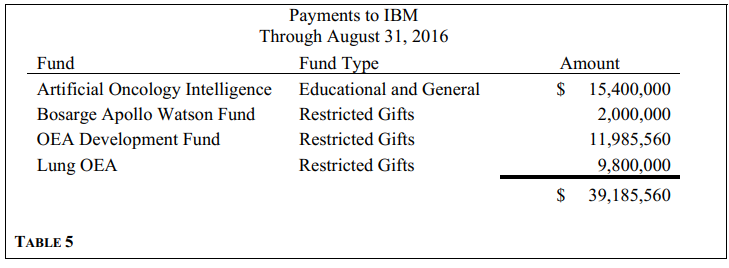
“The first MD Anderson contract related to development of OEA using Watson technology was signed with IBM in June 2012… The original contract terms were for six months at a fixed fee of $2.4 million. That contract has been extended 12 times, with total fees of $39.2 million. The current extension expired on October 31, 2016.”

Interestingly, if you search in the document for “radiology” or “imaging”:


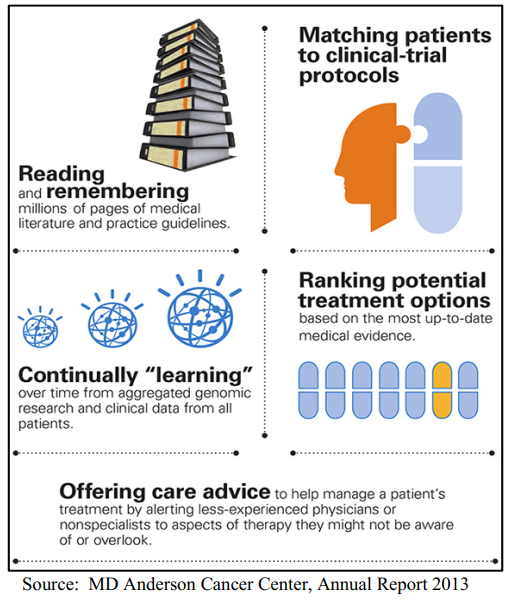
That said, it is a good cautionary tale for the radiologist-informaticist because the value proposition very closely mirrored what we are hearing in imaging today.

Just swap out the words “treatment,” “clinical-trial,” and “therapy” with “diagnosis” and “imaging”: